A Bathroom Renovation can improve comfort, functionality, storage, and the overall value of your Toronto home. However, even a well-planned project can become stressful when important details are overlooked. Poor planning, unsuitable materials, hidden plumbing issues, and unrealistic budgets are some of the common problems homeowners face during renovations.
Toronto homes can also present unique renovation challenges, including older plumbing systems, compact layouts, condo restrictions, and permit requirements. Knowing the most common Bathroom Renovation Mistakes Toronto homeowners make can help you plan your project with greater confidence and avoid unnecessary costs.
Whether you are updating a small powder room or completely redesigning a primary bathroom, careful planning should come before demolition.
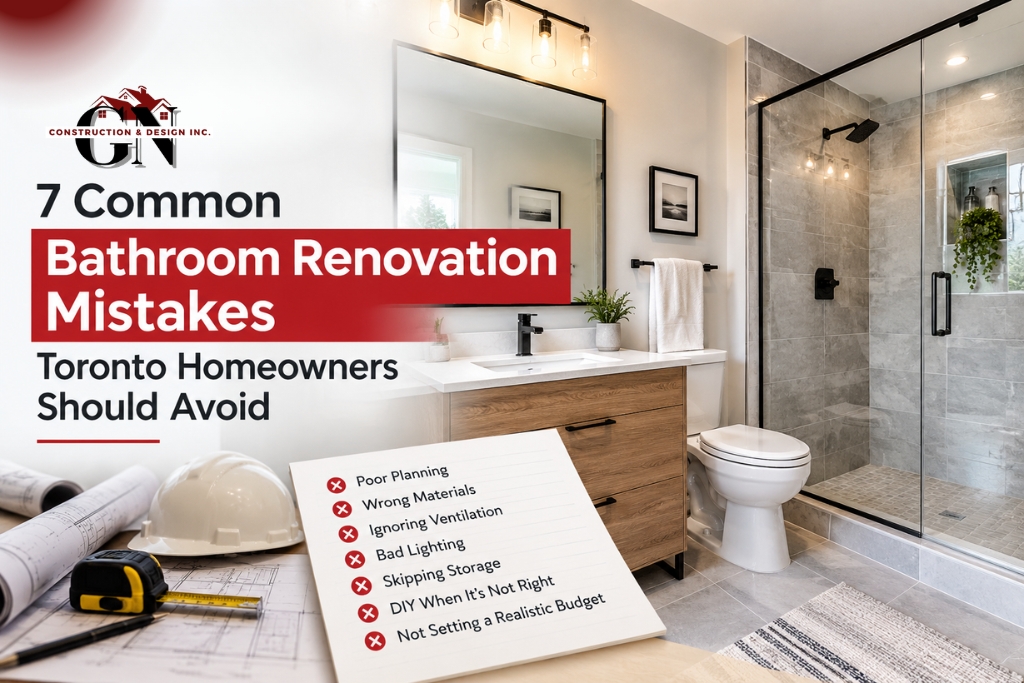
1. Starting Without a Detailed Renovation Plan
One of the biggest mistakes is beginning work without deciding exactly what the finished bathroom should look like. A renovation plan should cover the layout, fixtures, materials, lighting, storage, ventilation, plumbing, electrical requirements, and expected budget.
Changing decisions halfway through construction can increase both costs and timelines. For example, moving a toilet or shower may require plumbing changes that were not included in the original estimate.
Before work begins, consider:
- The purpose and users of the bathroom
- Existing plumbing and electrical locations
- Fixture sizes and placement
- Storage requirements
- Flooring and wall materials
- Lighting and ventilation
- Accessibility and long-term usability
- Expected project budget
A clear plan gives contractors a practical direction and helps homeowners make decisions before construction begins.
2. Underestimating the Total Renovation Budget
Many homeowners focus only on visible items such as tiles, vanities, toilets, and faucets. However, a bathroom renovation involves much more than finishing materials.
Behind the walls, contractors may discover damaged plumbing, outdated wiring, moisture damage, or structural concerns. These issues can affect the original budget if there is no contingency allowance.
A more realistic budget should account for:
| Cost Area | What to Consider |
|---|---|
| Demolition | Removal and disposal of existing materials |
| Plumbing | Pipes, drains, fixtures, and relocation |
| Electrical | Wiring, outlets, lighting, and safety requirements |
| Waterproofing | Shower and wet-area protection |
| Materials | Tiles, vanity, flooring, fixtures, and hardware |
| Labour | Installation and skilled trades |
| Permits | Applicable approvals and inspections |
| Contingency | Unexpected repairs or changes |
For Bathroom Renovation in Toronto, discussing the budget and potential unexpected costs early can make the project easier to manage.
3. Choosing Style Over Practical Bathroom Design
A bathroom can look impressive in photos but still be uncomfortable to use. Prioritising appearance over functionality is another common mistake.
For example, a large vanity may reduce movement space, while an oversized bathtub could take up valuable floor area in a compact bathroom.
Good bathroom design should balance appearance with everyday practicality.
Think about how people will move through the room. Make sure doors, drawers, shower enclosures, and fixtures do not interfere with each other.
Storage is equally important. Built-in cabinets, vanity storage, recessed shelving, and wall-mounted solutions can help keep everyday items organised without making the room feel crowded.
The best design is not necessarily the most elaborate one. It is the one that works well for the people using it.
4. Ignoring Waterproofing and Proper Ventilation
Water and humidity are unavoidable in bathrooms, making moisture management essential.
Cutting corners on waterproofing can lead to water penetration, mould growth, damaged walls, and costly repairs. Shower areas, floors, corners, joints, and other wet zones should receive appropriate waterproofing treatment.
Ventilation is also important, particularly in bathrooms that experience frequent humidity.
A properly planned ventilation system can help remove moisture and reduce the risk of condensation-related problems.
When planning your renovation, consider:
- Shower and wet-area waterproofing
- Proper sealing around fixtures
- Adequate bathroom ventilation
- Moisture-resistant materials
- Correct drainage and floor slope
- Regular maintenance of ventilation systems
These details may not be the most visible part of a renovation, but they can have a major impact on the bathroom’s long-term performance.
5. Selecting Materials Without Considering Durability
Another mistake is choosing bathroom materials based entirely on appearance or current trends.
Bathrooms are exposed to water, humidity, cleaning products, temperature changes, and frequent use. Materials need to withstand these conditions.
For flooring, homeowners should consider slip resistance and water exposure. For walls and shower areas, materials should be suitable for humid environments and easy to maintain.
When comparing materials, ask:
- Is it suitable for high-moisture areas?
- How difficult is it to clean?
- Will it withstand daily use?
- Does it require special maintenance?
- Is replacement easy if damage occurs?
- Does it work with the overall bathroom design?
A timeless, durable material can often be a better long-term choice than a trend that may quickly become outdated.
6. Overlooking Lighting, Storage, and Electrical Needs
Lighting is often treated as a finishing detail when it should be considered during the design stage.
A bathroom usually benefits from a combination of general, task, and accent lighting. The right placement can make grooming easier while improving the overall atmosphere of the space.
Electrical planning also matters. Outlets, lighting fixtures, switches, exhaust fans, and other electrical components need to be planned according to the bathroom layout and applicable requirements.
Storage should be considered at the same time.
Instead of adding storage after construction, identify where towels, toiletries, cleaning products, and personal items will be kept before finalising the layout.
For example:
- Vanity drawers can store everyday toiletries.
- Recessed shower shelving can reduce countertop clutter.
- Tall cabinets can provide additional vertical storage.
- Wall-mounted fixtures can make smaller bathrooms feel more open.
Thoughtful planning can make a noticeable difference in a compact Toronto bathroom.
7. Hiring a Contractor Based Only on the Lowest Price
Price is an important part of any renovation decision, but choosing a contractor solely because they offer the lowest quote can create problems later.
A very low estimate may not include every required service, material, preparation task, or potential repair. Comparing quotes based only on the final number can therefore make it difficult to understand what you are actually receiving.
When evaluating a renovation contractor, consider:
- Relevant renovation experience
- Scope of work
- Project timeline
- Materials and workmanship
- Communication process
- Permit and project coordination
- References or previous work
- Insurance and applicable credentials
Ask for a detailed scope of work so you can compare proposals more accurately.
GN Construction & Design Inc approaches renovation projects by focusing on planning, execution, functionality, and the specific requirements of each space. A clear process can help homeowners understand what is involved before construction starts.
What Should You Prioritise During a Bathroom Renovation?
Not every bathroom renovation requires a complete redesign. The right priorities depend on the condition of the existing space, your budget, and how you intend to use the bathroom.
| Priority | Why It Matters |
|---|---|
| Layout | Determines movement and fixture placement |
| Plumbing | Helps prevent costly future issues |
| Waterproofing | Protects walls, floors, and surrounding areas |
| Ventilation | Helps manage moisture and humidity |
| Lighting | Improves visibility and usability |
| Storage | Keeps the bathroom organised |
| Materials | Affects durability and maintenance |
| Budget | Keeps the project financially manageable |
If the existing layout works well, keeping plumbing locations in place may help control costs. If the bathroom has serious functionality problems, changing the layout may provide greater long-term value.
How to Avoid Common Bathroom Renovation Problems?
The easiest way to avoid renovation mistakes is to address important decisions before construction begins.
Start by assessing the existing bathroom. Identify what works, what needs improvement, and what must be replaced.
Then establish a realistic budget and decide which improvements are essential and which are optional.
Next, develop the layout and select materials based on durability, maintenance, and available space. Make sure plumbing, electrical, ventilation, waterproofing, and permit requirements are considered before work starts.
Finally, choose a contractor who can clearly explain the scope, timeline, materials, and construction process.
For homeowners planning Bathroom Renovation in Toronto, professional guidance can be especially useful when the project involves layout changes, older properties, complex plumbing, or multiple trades.
Final Thoughts on Bathroom Renovation Mistakes
A successful bathroom renovation is not simply about installing attractive tiles and modern fixtures. It requires careful planning, practical design, durable materials, proper moisture control, and qualified execution.
The most common Bathroom Renovation Mistakes Toronto homeowners make often happen before construction even begins. Failing to plan the layout, underestimating the budget, overlooking waterproofing, choosing unsuitable materials, and hiring based only on price can create avoidable problems.
Taking time to plan properly can help you create a bathroom that looks good, functions well, and remains practical for years.
If you are considering a bathroom renovation, GN Construction & Design Inc can help you plan and execute a functional, well-designed space tailored to your requirements. Contact the team today to discuss your renovation project and take the next step toward a better bathroom.
Frequently Asked Questions
1. What is the most common bathroom renovation mistake?
Poor planning is one of the most common mistakes. Homeowners may begin demolition before finalising the layout, budget, materials, plumbing, storage, lighting, and other important details.
2. Do I need a permit for a bathroom renovation in Toronto?
Permit requirements depend on the type and scope of renovation. Projects involving structural changes, plumbing alterations, electrical work, or other regulated changes may require approvals. It is important to confirm the applicable requirements before construction begins.
3. How can I keep my bathroom renovation budget under control?
Start with a detailed scope of work and realistic budget. Prioritise essential improvements, compare detailed contractor proposals, and keep a contingency amount available for unexpected conditions discovered during construction.
4. What materials are best for a bathroom renovation?
Materials should be selected according to moisture exposure, durability, maintenance requirements, safety, and design. Water-resistant and easy-to-maintain materials are generally practical choices for bathroom applications.
5. Should I change the bathroom layout during a renovation?
Not necessarily. If the existing layout works well, keeping plumbing locations can simplify the project. However, changing the layout may be worthwhile when the existing space has poor functionality, inadequate storage, or inefficient fixture placement.